Thursday, July 04, 2013

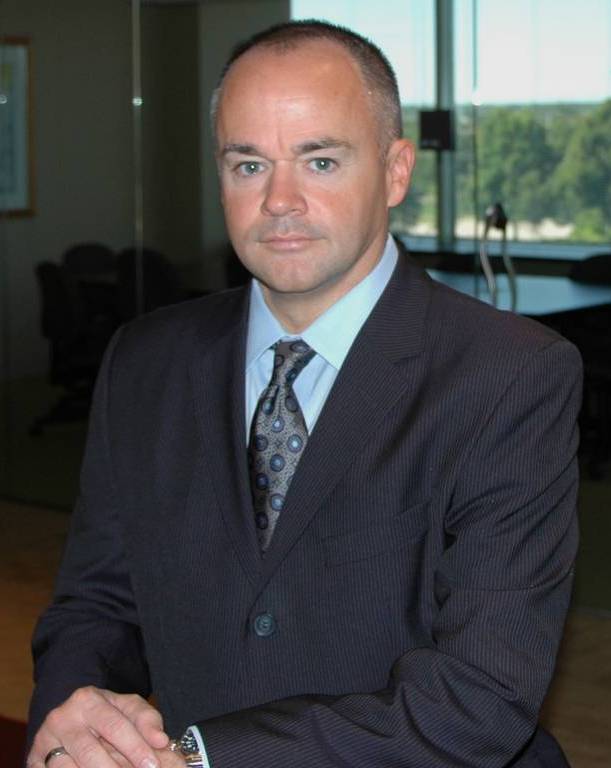
Judge Marguerite Quinn announces Appellate Court bid on North Town News Magazine


Judge Marguerite Quinn was recently interviewed for Avy Meyers' North Town News Magazine program. In the course of her interview, Judge Quinn advised of her plans to run for the Appellate Court in the upcoming 2014 primary. (She has not, as yet, updated her campaign website from 2012 (when she also ran) so I'm not providing a link.)

My thanks, as always, to Mr. Meyers (and to his entire technical crew, Sonny Hersh) for allowing me to repost the interview.

Saturday, June 29, 2013

Government should not attempt to "define" journalist or journalism: Journalism is something people sometimes do, not something people are

In an essay headlined, "Time to Say Who's a Real Reporter," published in the Thursday June 27, 2013 Chicago Sun-Times, U.S. Senator Dick Durbin writes:
A journalist gathers information for a media outlet that disseminates the information through a broadly defined "medium" -- including newspaper, nonfiction book, wire service, magazine, news website, television, radio or motion picture -- for public use. This broad definition covers every form of legitimate journalism.
No, Senator, no it doesn't. It doesn't even come close.

Senator Durbin insists that "not every blogger, tweeter or Facebook user is a 'journalist.'"

But sometimes mere bloggers, tweeters and Facebook users are journalists. Like so much else in the law, their status should depend on what they blog or tweet or post about, not on who they are.

On June 20, 2009 a young man participating in a protest in the streets of Tehran against that year's Iranian election witnessed a Basij militia member shoot a fellow protester, Neda Agha-Soltan, in the heart. He did more than witness. Robert Tait and Matthew Weaver, persons who would qualify as "journalists" under Senator Durbin's definition, explain in the June 22, 2009 edition of the Guardian:
Shortly after 5pm on Saturday ­afternoon, Hamed, an Iranian asylum seeker in the ­Netherlands, took a frantic call from a friend in Tehran.

"A girl has just been killed right next to me," the friend said. It had all ­happened quickly. A young woman, chatting on her mobile phone, had been shot in the chest. She faded before a doctor, who was on the scene, could do anything to help.

There was more. Hamed's friend, who does not want to be named, filmed the incident on his phone. Within moments the footage had landed in Hamed's inbox. Five minutes later it was on YouTube and Facebook.

Within hours it had become one of the most potent threats faced by the ­Iranian regime in 30 years.

"He asked me, is it possible to publish everything right now," Hamed said. "I published it on YouTube and Facebook and five minutes later it started to get many emails and messages and it ­published everywhere.
Hamed and his anonymous friend didn't graduate from Medill. Like as not, they probably had no 'training' in journalism whatsoever. But they were doing journalism in June 2009, if never before or since.

But, in Senator Durbin's scheme, Hamed would be entitled to no journalistic privilege -- meaning he could be compelled to name the friend who sent him the video of Neda's murder.

There are dozens of other examples that could be cited. If the world had to depend on government-designated "journalists" there would have been no Arab Spring: The Arab Spring blossomed because of Facebook and Twitter. The initial news about these uprisings came to the world by these same means.

Certainly, Facebook- and Twitter-use alone does not a journalist make. Endlessly recycled inspirational cartoons or kitten pictures do not amount to journalism. Gangbangers who use Facebook or Twitter to coordinate wildings on Michigan Avenue are not doing journalism either.

But even journalists don't "do journalism" all the time. Mike Royko would have met Senator Durbin's definition, surely, but was he really doing journalism when he was 'reporting' on the latest theories of Dr. I.M. Kooky or recounting the latest exploits of Slats Grobnik?

Founding Father Benjamin Franklin was America's first media mogul, controlling a string of newspapers in several colonial cities at one point. Surely he'd qualify as a journalist under Senator Durbin's definition, too. But was the teenage Ben Franklin a journalist (even though working in his brother's print shop) when he fabricated the Silence Dogood letters?

The individual or individuals who run Second City Cop would probably resent any suggestion that they (or he or she) are journalist(s). Second City Cop regularly makes fun of journalists, particularly when a story posted on the blog is belatedly picked up by the "legitimate" journalists Senator Durbin would want to protect. And yet -- after wading through the partisan rhetoric in which many posts are cloaked -- SCC clearly 'does journalism' on a regular basis. But Senator Durbin would permit (and, I'm sure, several members of the police brass and city government would welcome) exposure of the anonymous bloggers and compel revelation of their sources.

Senator Durbin says that 49 states have already decided who, and who is not, a journalist. In this, the Senator is right, but only because the several states are wrong. Shield statutes have been godsends on occasion, but their protection is woefully uneven because these statutes typically focus on a person's credentials rather than on the activity that the person was engaged in when considering whether that person can be compelled to disclose the sources of the information published.

Thus, in Illinois, the reporter's privilege is codified at §§8-901 to 8-909 of the Illinois Code of Civil Procedure, 735 ILCS 5/8-901 to 8-909. To qualify for the privilege, however, a person must first meet the statutory definition of "reporter" found at §8-902(a):
"Reporter" means any person regularly engaged in the business of collecting, writing or editing news for publication through a news medium on a full-time or part-time basis; and includes any person who was a reporter at the time the information sought was procured or obtained.
The term "news medium" is defined at §8-902(b):
"News medium" means any newspaper or other periodical issued at regular intervals whether in print or electronic format and having a general circulation; a news service whether in print or electronic format; a radio station; a television station; a television network; a community antenna television service; and any person or corporation engaged in the making of news reels or other motion picture news for public showing.
Good luck to the blogger trying to squeeze into that definition.

There are many other protections for persons who express themselves, online or off, without resort to special laws for journalists. But the idea of defining journalists in order to "protect" them seems downright un-American. With all due respect to Senator Durbin, a federal law in this regard would be a dangerous and unhealthy step in the wrong direction.

Thursday, June 27, 2013

Justice Harris launches 2014 campaign web site

Justice Sheldon A. "Shelly" Harris has launched a campaign website in anticipation of the forthcoming 2014 primary. That's a link to the site in the preceding sentence. (Soon, as campaign websites continue to accumulate, all Cook County judicial campaign websites will be added to the sidebar of this blog.)

Justice Harris was appointed to the Steele vacancy on the Appellate Court in January of this year. However, Harris has been serving on the Appellate Court since 2010 (a quarter of the First District's justices are Cook County Circuit Court judges assigned by the Illinois Supreme Court).

--------------------------------------------------------
Related: Justice Steele's retirement prompts Appellate Court reshuffle; Judge Daniel J. Pierce promoted

Tuesday, June 25, 2013

Attention Chicago Law Schools: Here's how you can help provide equal access to justice and give law students meaningful clinical experience

Hey, Loyola, DePaul, Kent -- I had another one of those calls today.

"Do you do civil cases?"

"Yes," I said (well, maybe, I qualified, but only to myself). "What kind of case do you have?"

It turned out that -- in my opinion -- he didn't have a case, not an economically viable one, anyway.

He had a car, an older car, a 2001 model, but one he used for work each and every day. It ran. He just put $1,000 in it this spring, he told me, for repairs, but a few weeks back some drunk kid ran into it while the car was legally parked, minding its own business. The drunk kid had insurance, but -- my caller told me -- the kid's insurance company only offered him $1,600 for his ruined vehicle.

"I can't get another car for that little money!" he told me, "and I need my car to work. I'm losing money every day!"

Well, we are attorneys and counselors, I though to myself. I sympathize with you, I told him, but the truth of the matter is that you're really only entitled to the fair market value of your totaled vehicle. On a car as old as yours, I said, you can't expect a lot of money. Certain sources are considered authoritative on this, I told him, like the Kelley Blue Book -- but those books just don't put a big price tag on 2001 vehicles, even if they are running well.

"That's what they told me," the man said, "but I looked it up, and they should have given me $2,000."

"Because it was in good condition."

"Exactly."

OK, I told him, maybe you do have a case. For $400.

My caller deflated slightly.

Look, I told him, there's lots of other lawyers smarter than me. Maybe one of them can come up with an angle where you can recoup more of your actual losses. I started to give him the telephone number to the Chicago Bar Association Lawyer Referral Service. (I keep that number -- 312-554-2001 -- handy for occasions like this one.)

"Thank you," he said, "but I already called them. And they gave me lots of numbers. But nobody would take my case, and you're the first person who's taken any time to explain anything."

Hmmm, I said, you might try one of the law schools. They all have clinics. (I'm thinking of you, John Marshall, and you, Northwestern, and you, too, University of Chicago.) Unfortunately, I warned him, they don't seem very interested in the problems of actual working people. Now, I said, if you had an environmental problem, or if you were a public housing resident threatened with eviction because of your criminal record....

"I just want the value of my car," my caller said.

"It's not that you don't have a case," I said, "it's just that maybe law school students can take a case for $400 and get some good experience and do you some good. I take a $400 case and my wife will kill me." (He laughed.) "Seriously, anything I could do for you would cost you more than I think you can get."

He thanked me again and I wished him well. Sometimes, I told him, even when you're in the right, it's just best to move on.

He said he'd think about, and hung up the phone.

I get calls like this once a month -- at least. Sometimes it comes closer to a call a week. I'm just one lawyer. I'm sure lots of other lawyers get calls like these.

A lot of these callers have real, practical cases that no real lawyer can make a dime from -- but why wouldn't a law school consider setting up a clinical program that could handle these kinds of garden-variety consumer issues? They could get experience that might serve them well in real jobs.

Loyola? DePaul? Kent? NU? John Marshall? U of C? Is anybody out there?

Christopher Edward Lawler appointed to Sterba vacancy in 15th Subcircuit

The Illinois Supreme Court yesterday appointed Christopher Edward Lawler to the south suburban 15th Subcircuit vacancy that will be created by the pending retirement of Judge David P. Sterba.

Lawler, an attorney in Illinois since 1988, currently practices with the Chicago law firm of Hilbert, Lawler & Power, Ltd. His appointment is effective July 8, 2013 and expires on December 1, 2014.

Saturday, June 15, 2013

Who sits where -- updated edition

Updated 6/25/13 to add the Sterba vacancy.

Updated 6/21/13 to add the Felton vacancy. I apologize for the omission.

This is an update of a post that first appeared in March.

What follows is not a comprehensive list of Cook County judicial vacancies, but rather a list of vacancies that have been filled by Supreme Court appointment. There may be (and often are) vacancies which the Supreme Court has not filled. There will be additional vacancies, and additional appointments between now and late fall when the Illinois State Board of Elections posts an authoritative list of judicial vacancies in anticipation of the 2014 primary.

As always, all errors or omissions in this list are mine alone and I am grateful for additions and corrections provided.

Appellate Court Vacancies

Vacancy of the Hon. Joseph Gordon -- William H. Taylor
Vacancy of the Hon. Michael J. Murphy -- John B. Simon
Vacancy of the Hon. John O. Steele -- Sheldon A. Harris

Countywide Vacancies

Vacancy of the Hon. Nancy J. Arnold -- Alfred M. Swanson, Jr.
Vacancy of the Hon. Dennis J. Burke -- Michael F. Otto
Vacancy of the Hon. Maureen E. Connors -- Peter J. Vilkelis
Vacancy of the Hon. James D. Egan -- Daniel J. Kubasiak
Vacancy of the Hon. Donna Phelps Felton -- Thomas J. Carroll
Vacancy of the Hon. Pamela Hill-Veal --  Andrea M. Buford
Vacancy of the Hon. Nathaniel R. Howse, Jr. -- Caroline K. Moreland
Vacancy of the Hon. Barbara A. McDonald -- Cynthia Y. Cobbs
Vacancy of the Hon. P. Scott Neville -- Gregory Emmett Ahern, Jr.
Vacancy of the Hon. Jesse Reyes -- Jean Margaret Cocozza

Subcircuit Vacancies

4th Subcircuit
Vacancy of the Hon. Richard J. Billik, Jr. -- Daniel L. Peters

7th Subcircuit
Vacancy of the Hon. William H. Taylor II -- Freddrenna M. Lyle

9th Subcircuit
Vacancy of the Hon. Lee Preston -- Allan W. Masters

10th Subcircuit
Vacancy of the Hon. Daniel J. Sullivan -- Anthony C. Kyriakopoulos

11th Subcircuit
"A" Vacancy -- Pamela McLean Meyerson

12th Subcircuit
Vacancy of the Hon. Edward R. Jordan -- James L. Kaplan

13th Subcircuit
Vacancy of the Hon. Anthony A. Iosco -- Lauretta Higgins Wolfson

15th Subcircuit
Vacancy of the Hon. John T. Doody, Jr. -- Diana L. Embil
Vacancy of the Hon. David P. Sterba -- Christopher Edward Lawler

Judicial hopeful Michael Strom in first NTNM candidate interview of the 2014 campaign


Ninth Subcircuit judicial candidate Michael Strom was recently interviewed by Avy Meyers on the North Town News Magazine show, now in rotation on CAN-TV and various suburban cable systems.

My thanks to Mr. Meyers (and his entire technical staff, Sonny Hersh) for allowing me to share these interviews here.

Friday, June 14, 2013

Former Judge Allan W. Masters appointed to Preston vacancy in 9th Subcircuit

The Illinois Supreme Court yesterday appointed Allan W. Masters to a 9th Subcircuit vacancy created by the retirement of Judge Lee Preston. Judge Masters will resume judicial duties today; his appointment expires December 1, 2014. Masters has been licensed as an attorney in Illinois since 1967.

Aside to the Tribune: This is not a recall appointment, although Masters previously served on the bench, most notably in the Domestic Relations Division.

Wednesday, June 05, 2013

Patricia O'Brien Sheahan announces judicial candidacy, Thursday fundraiser

Patricia O'Brien Sheahan, Associate General Counsel at the Rehabilitation Institute of Chicago (RIC), has announced her plans to run for Circuit Court Judge in the 2014 Democratic Primary. That's a link to Sheahan's campaign website in the preceding sentence.

An Evanston resident, Sheahan is a 1996 graduate of the IIT-Kent College of Law. She began her legal career with Baker & McKenzie before moving to the Rehabilitation Institute in 1999.

Her campaign press release notes that Sheahan been active with the Center for Disability and Elder Law (CDEL), which provides pro bono legal services to low-income senior citizens and people with disabilities, serving as a member of the Governing Board of Directors for CDEL for nearly 15 years. She is also the Secretary of the St. Joan of Arc School Parent/Student Organization and has been a volunteer serving the needy at a soup kitchen run by the Evanston Ecumenical Council of Churches. Her husband, T.J., is is a partner in the Litigation Group at the law firm Freeborn & Peters, LLP and is the son of retired Cook County Sheriff Michael F. Sheahan.

Per email received from the Sheahan campaign, a kickoff fundraiser has been scheduled for tomorrow night, June 6, at English, 444 N. LaSalle Street, from 6:00 to 8:00 pm. Individual tickets are $150 each. Sponsorships are available ($250 – Friend, $500 – Benefactor, $750 – Sponsor, and $1,500 – Co-Chair). Attorney Robert A. Clifford of Clifford Law Offices is hosting the event and chairing Sheahan's campaign. To reserve tickets or for more information about the event, call Brittany Riordan at (312) 259-9341.

Greg Ahern announces 2014 election bid

Judge Gregory Emmet Ahern, Jr., who was appointed late last year to the countywide Neville vacancy, has announced plans to run for election in the 2014 Democratic primary. That's a link to Ahern's campaign website in the preceding sentence; the campaign also has a Facebook page up and running.

Ahern was a candidate for the 6th Subcircuit vacancy in the 2012 primary. At the time of his appointment to the bench, Ahern was serving as a Cook County Assistant State's Attorney. Ahern's campaign website notes that, while an ASA, he prosecuted more than 50 felony trials, including more than 25 first degree murder cases.


Illinois Judges Foundation plans July 23 Comedy Night

The Illinois Judges Foundation and its Auxiliary Committee are hosting a Comedy Night fundraiser on Tuesday evening, July 23 at the Second City e.t.c. stage, 230 W. North Avenue.

A reception begins at 6:00; the show starts at 7:15.

Tickets are $100 each, and sponsorship opportunities are available.

To purchase tickets or for questions about sponsorships or any other questions about the event, visit this page on the IJF website, send an email to ijf@chicagobar.org, or call Kevin Fagan at 312-554-2008 or Christine Athanasoulis at 708-705-4355.

Tuesday, June 04, 2013

Linda J. Pauel plans 10th Subcircuit judicial bid

Linda J. Pauel, who was a candidate for the countywide Dolan vacancy in the 2010 Democratic Primary, has announced her 2014 candidacy for judge in the 10th Judicial Subcircuit.

Pauel's campaign website is pauelforjudge.com. In a statement on her Facebook page, Pauel wrote, "We need qualified and fair-minded people in all branches of government, my focus is the judiciary."

A 1991 graduate of the IIT Chicago-Kent Law School (from which she graduated summa cum laude and with the Order of the Coif), Pauel is employed by the City of Chicago Law Department.

Judge Mary Anne Mason assigned to Appellate Court

In an order entered yesterday, the Illinois Supreme Court assigned Judge Mary Anne Mason to the Illinois Appellate Court.

Judge Mason, who presently sits in the Chancery Division, will assume her new duties on July 8, after Justice David P. Sterba retires.

Justice Sterba was also serving in the Appellate Court by assignment. His July 1 resignation will open up a vacancy in the 15th Judicial Subcircuit for the 2014 election cycle.

---------------------------------------------------
UPDATED to insert link to corrected appointment order issued earlier today. Also, the Supreme Court has today released this press release concerning Judge Mason's appointment.

Saturday, June 01, 2013

Norwood Park Memorial Day Parade photos

We were a little late arriving this year. It couldn't be helped. My regular photographer brought a very young assistant with her this year and said assistant had to be off-loaded on Grandpa before my photographer could set up.

We missed most of the politicians and the squad of riflemen dressed in uniforms from the Revolution to World War II that set off a volley on our corner.  My photographer may have dawdled a little on purpose; she thought her young assistant would have some problems with the gunshot noise (and she did have trouble, later on, when a muscle car revved too loudly as it went by).

But my photographer was able to capture a lot of the groups that came out to honor America's fallen heroes in Norwood Park's 2013 Memorial Day Parade.

The Taft High School Navy JROTC

And you can't have a parade without bands....


No neighborhood parade is complete without lots and lots of school groups, scout troops and packs.
Norwood Park Lutheran Cub Pack
Cub Scouts from St. Monica's
The St. Thecla group brought its own classic car
Cub Pack from St. Tarcissus
Immaculate Conception Parish Girl Scouts

For more pictures from Monday's parade, click here to turn to Page Two.

Friday, May 31, 2013

Death of a Downstate judge, downfall of another

Joseph D. Christ was serving as an Assistant State's Attorney in far Downstate St. Clair County when the judges of the 20th Judicial Circuit elected him as an associate judge this past February.

Ten days after he was sworn in, Judge Christ was dead.

At first, the death of the 49-year old, married father of six was attributed to natural causes. That's what Marlon A. Walker reported in the March 12 editions of the St. Louis Post-Dispatch. Walker wrote that Christ died on a duck-hunting trip with friends.

More specifically, he died in a Pike County hunting lodge owned by fellow Judge Michael N. Cook.

And then, as Robert Patrick reported for the Post-Dispatch, the Pike County Sheriff (who doubles as Pike County Coroner) found cocaine underneath Judge Christ's body. Toxicology reports suggested the presence of both cocaine and alcohol and authorities are now convinced that Christ died of a drug overdoes.

Judge Cook was only other person in the hunting lodge when Christ died and Cook was arrested on federal drug charges on May 22. But these charges are not related to the death of Judge Christ.

Beth Hundsdorfer of the Bellville News-Democrat wrote in a May 27 story published on the Post-Dispatch website that Cook appeared for an initial hearing before the federal magistrate last Friday "wearing cut-offs, a 'Bad is my middle name' T-shirt and shackles as he was arraigned on federal charges of possessing a weapon while using drugs and possession of heroin." Cook was arrested in the home of a 34-year old friend and former client, Sean McGilvery, who has also been charged, according to Hundsdorfer's article, "on two federal counts, conspiracy to distribute, and possession with intent to distribute heroin."

On May 28 the Springfield State Journal-Register carried an AP story claiming that a St. Clair County probation worker, James Fogarty, admitted to an FBI informant that he'd provided cocaine to both Judges Cook and Christ.

Paul Hampel writes in the May 29 Post-Dispatch that Cook has resigned from the bench -- or tried to. The Supreme Court had not yet received Cook's resignation letter and, according to Hampel's article, "The Supreme Court requires that a judge’s resignation be in writing to the chief justice, with a copy to the justice in the district in which the resignation takes place and to the director of the Administrative Office of the Illinois Courts." The delay may be caused by the fact that Cook's access to the outside world is currently limited: Though free on bail, Cook has entered a drug treatment facility.

St. Louis television station KSDK reports that Judge Cook handled 90 percent of the circuit's drug court cases.

Cook, 43, was elected an associate judge in St. Clair County in 2007. He was appointed a circuit judge by the Supreme Court in October 2010, a month before he would have won election to the bench in an uncontested race.

The mysterious pricing of medical services -- the government reveals what it is charged and what it pays for a variety of medical services

The Centers for Medicare & Medicaid Services (CMS), f/k/a the Health Care Financing Administration (HCFA), recently released a massive report on health care costs comparing, according to the agency's press release, "comparing the charges for services that may be provided during the 100 most common Medicare inpatient stays" that hospitals bill to the government.

Quoting from the CMS press release:
These amounts can vary widely. For example, average inpatient charges for services a hospital may provide in connection with a joint replacement range from a low of $5,300 at a hospital in Ada, Okla., to a high of $223,000 at a hospital in Monterey Park, Calif.

Even within the same geographic area, hospital charges for similar services can vary significantly. For example, average inpatient hospital charges for services that may be provided to treat heart failure range from a low of $21,000 to a high of $46,000 in Denver, Colo., and from a low of $9,000 to a high of $51,000 in Jackson, Miss.
Just for fun, I looked at the report and selected a number of Chicago area hospitals comparing prices billed for treatment of chest pains. Interestingly, at least in this miniscule sample, the amounts paid are not necessarily proportionate to the amounts billed. These are my notes:


Treatment for "Chest Pain"

Hospital Name Amt. Billed Amt. Paid
Swedish Covenant$23,159$4,229
Jackson Park$22,150$5,023
Resurrection Medical Center$20,641$3,679
Mt. Sinai$17,735$5,671
Little Company of Mary$17,392$4,042
Advocate Christ Medical Center$16,155$4,843
Mercy Hospital$10,553$5,040
Stroger (Cook County) Hospital$7,616$4,229

Now the CMS press release suggests (but, in fairness, does not claim) that the amounts billed to the government are also the amounts billed to private insurers for the same services. I don't believe that to be the case. Based on my experience in handling injury claims, it seems to me that hospitals bill one price to Medicare and Medicaid but a different (and lower) price to private insurers. The amounts billed may even vary from insurer to insurer. It seems to me that Blue Cross might negotiate a different rate for (say) an overnight hospital stay than United Health, while the government receives still a third figure for the overnight stay of a Medicare or Medicaid recipient. Perhaps someone with knowledge on this point might leave a comment -- although I'd bet that hard data on every hospital's private insurer billing is guarded like the Colonel's original recipe or the formula for Coca-Cola.

I can understand how a service might be priced differently from hospital to hospital: One hospital's treatment philosophy might differ from another. Hospital A may have more experienced (older and pricier) physicians on staff than Hospital B. One can imagine all sorts of reasons -- although some of the variances revealed by this report seem rather extreme.

Still, for me, the real question is how the health industry gets away with no-set-price pricing for the same service at the same hospital. Can you imagine going into your neighborhood Jewel and finding that the same box of one dozen eggs or gallon of 2% milk might have three or four different prices depending on who brings it to the checkout line?

--------------------------------------------------------------------------------
HT to the ISBA listserv, where I first saw a discussion of this report.

For further reading, see the Washington Post Wonkblog, One hospital charges $8,000 — another, $38,000

Tuesday, May 14, 2013

James Crawley announces 2014 judicial bid

Chicago attorney James P. Crawley has announced that he plans to run for judge in the 2014 judicial primary.

An Illinois attorney since 1990, Crawley practices law with James P. Crawley & Associates, Ltd.

Crawley says he will seek slating from the Democratic Party for either a countywide judicial vacancy or in the 10th Judicial Subcircuit, where he resides (Crawley is a resident of the Jefferson Park neighborhood).

Crawley's campaign says that Crawley's "volunteer activities include serving on the board of Jane Addams Hull House–Uptown Center, and AIDS Care, Inc., a residential facility for people living with acquired immune deficiency syndrome. He served on the citizens’ advisory council to the Chicago Police Department, and has donated to inner-city youth organizations such as Mercy Home for Boys & Girls, the Women Everywhere Project, and Windy City Hoops, which organizes activities in neighborhoods hard hit by gang violence."

According to his campaign announcement, Crawley was born in Joliet, and raised in a family of union workers. He received his undergraduate degree in 1986 from Loyola University Chicago and his law degree in 1989 from Saint Louis University School of Law. During his college years, Crawley served as an aide to then-U.S. Senator Paul Simon.

Crawley advises that he is a member of the American Bar Association, Illinois State Bar Association, Illinois Trial Lawyers Association, Chicago Bar Association and Lesbian and Gay Bar Association of Chicago. Crawley is also a member of the trial bar of the U.S. District Court for the Northern District of Illinois and is admitted to practice before the U.S. Supreme Court. Crawley has been married since 2008, his campaign announcement states.

Daniel E. Ingram is the Chair of Crawley's campaign committee, Citizens to Elect James Patrick Crawley. The committee can be reached by email at CrawleyForJudge@gmail.com.

Tuesday, May 07, 2013

Michael Strom announces 9th Subcircuit judicial bid

It begins.

Chicago attorney Michael A. Strom has announced his candidacy for judge in the north suburban 9th Judicial Subcircuit.

Licensed in Illinois since 1977, Strom is currently of counsel to Strom & Associates, Ltd.. He was formerly an attorney for CNA Insurance.

Strom is the 2012-2013 President of the Decalogue Society of Lawyers and for 27 years has worked as a teacher and coach with the Chicago Coalition for Law-Related Education, teaching course work on criminal and civil trial process at South Shore High School and coaching high school mock trial teams that in city-wide competitions. (Strom's LinkedIn page notes that South Shore has won two citywide championships during his tenure.)

Strom's campaign committee can be reached at stromforjudge2014@gmail.com.

----------------------------------------------------------------------
Attention 2014 Cook County Judicial Candidates: If you're ready to go public with your 2014 plans, send me an email. Use that link or the link in the Sidebar of this blog.

Tuesday, April 23, 2013

Supreme Court fills two Cook County judicial vacancies

Andrea M. Buford
In an order entered today, the Illinois Supreme Court appointed Andrea M. Buford to a countywide judicial vacancy created by the retirement of Judge Pamela E. Hill-Veal. Buford's appointment is effective May 17 and will terminate December 1, 2014.

Buford has had her own Loop law practice since 2001. Before that, Buford practiced with Buford Peters Ware & Zanzitis and as a partner with the law firm of Jones Ware & Grenard. A 1986 graduate of IIT Chicago-Kent College of Law, Buford is a former president of the Cook County Bar Association and currently serves as President of the Cook County Bar Foundation. She also serves as a Commissioner for the Illinois Court of Claims.

Pamela McLean Meyerson
The Supreme Court today also appointed Pamela McLean Meyerson to the 11th Subcircuit vacancy created by the retirement of Judge Susan J. McDunn. Meyerson's appointment is effective June 7 and terminates December 1, 2014.

Meyerson has a solo law practice in Oak Park since 1989, representing individuals and small businesses in civil disputes involving contracts, construction, fair housing, consumer fraud, and other conflicts. She has also organized and advised small businesses "from restaurants to record companies, contractors to computer consultants, [and] midwives to meatpackers." Meyerson began her legal career with the firm of Antonow & Fink, moving thereafter to Goldberg Kohn Ltd.

A 1983 graduate of the University of Chicago Law School, Meyerson has helped teach the Intensive Trial Practice Work at the University of Chicago's Mandel Legal Aid Clinic since 2000.

Today's appointments are noteworthy in that they are the first credited to the screening committee created by Supreme Court Justice Mary Jane Theis. As the court's press release today notes, "Traditionally, the three justices from the First Judicial District in Cook County rotate in recommending" candidates for appointment to Cook County vacancies as they occur. However, the court has not always disclosed which justice has recommended a particular appointment.

Saturday, April 06, 2013

Access to justice must involve access to lawyers

Equal access to justice is on the minds of so many in the legal profession these days. It was the theme of the recent Illinois Justice Foundation Spring Reception; a page on the Legal Assistance Foundation website proclaims, "Equal Justice Starts Here."

We are all agreed on the destination; we are, however, uncertain how to get there. The Illinois Supreme Court has established a Commission on Access to Justice to help us chart the way.

Not so long ago, the vision was much clearer: Lawyers would lead the way to equal justice. We are just past the 50th anniversary of Gideon v. Wainwright, 372 U.S. 335 (1963), when the U.S. Supreme Court mandated that states must provide indigent defendants in criminal cases with lawyers at state expense. Equal access to justice was equivalent to equal access to lawyers.

Today, though, lawyers are seen as more a problem than a solution. It may not be polite to say so directly, but lawyers are considered too darned expensive. It's not just the indigent who can not afford lawyers; quality legal representation seems beyond the reach of the not-so-poor, even the middle class. Small businesses increasingly skimp on legal representation. Some of them may not suffer for it. But only some.

Lawyers are increasingly urged to provide pro-bono representation. Illinois lawyers are required to report how many hours they donate each year; New York lawyers are now required to donate 50 hours of pro-bono time in order to keep their licenses. This approach might provide an effective stopgap if there were a critical shortage of lawyers, while law schools churned out new recruits.

But the unavailability of legal representation for so many is not due to any shortage of lawyers; on the contrary, newly minted lawyers are flipping burgers and folding pants. Law schools are being sued (so far without much success) for providing inflated statistics about employment prospects. Meanwhile, older lawyers are getting jettisoned from firms; many are abandoning the profession.

Some blame the disconnect between persons in need of legal services and legal service providers who can not find work on law schools, others on outmoded business methods generally (and the hourly fee in particular).

These surely play a role, but I believe there's a third, greater culprit: Discovery.

Discovery is the wedge that is dividing BIG LAW from the rest of us (call us little law if you like).

John Flynn Rooney reported in Friday's Chicago Daily Law Bulletin that McDermott, Will & Emery LLP
has expanded its discovery center operations to house up to 125 project attorneys working out of three locations.

That includes 90 in Chicago, up from 60; a new document review facility for up to 25 lawyers in Menlo Park, Calif.; and space for 10 lawyers at a Washington, D.C., facility.

The discovery center attorneys review and store electronic information that is used before and during litigation. The firm can have up to 175 lawyers reviewing documents simultaneously.

The staff attorneys are permanent firm employees who are not on a partnership track and are paid an annual salary, [firm co-chairman Jeffrey E.] Stone said.
According to the Law Bulletin article, a team of 20 technology professionals backs up the McDermott attorneys, and the firm has invested in new document-reviewing technologies, particularly in its Silicon Valley location.

Stories like this tell me that it is time for those of us in little law to recognize that our colleagues in BIG LAW are evolving into a different profession. We should wish them well, but let them go their own way; we must no longer ape them.

And, make no mistake, we in little law have for too long tried to imitate our BIG LAW brothers and sisters.

I remember, as a baby lawyer a generation ago, how excited my elders were when new word processing technology permitted us to propound form interrogatories, just like the big firms. The big firms have aggressively pursued full discovery for decades. Once they could, smaller firms followed suit: Discovery has gone from an option to a necessity in the course of my career. I tried a case 18 years ago in which next to no discovery had been taken. The insurer pulled the file from the first defense firm it had retained (even back then there were mutterings that failing to pursue complete discovery was near-malpractice at least) and my initial task was to frantically beg and plead the court to open up discovery. I tried groveling, even, but it was no use. I was forced out to trial.

Surprisingly, perhaps, the world did not end: The weekend before the trial I went out to inspect the locus in quo with my 10-year old son. We took some pictures. I came up with a strategy and it actually worked (I got a defense verdict).

I don't think this sort of thing happens very often these days: Motion Judges in the Law Division today conduct case management conferences every 30 to 60 days, or even more frequently, on occasion, when an attorney fails to complete discovery tasks as expected. Discovery is done or it is waived -- with a written order documenting the choice. If something bad happens down the road, no one wants to have a forfeiture order proving that he or she didn't do all that was possible.

All this discovery costs money. Insurance companies may complain about the expenses, but it's the uninsured litigants who crumble under the costs.

Those of us left behind in little law are going to have to find some way to help clients resolve disputes without automatically incurring the expenses of discovery. Let BIG LAW build 'discovery centers.' We should work on early dispute resolutions, using mediation or any other tools we can develop. Realistically, if we hope to provide equal justice for all, realistic access to lawyers in a streamlined, cost-effective litigation process will have to be part of the overall solution.

Friday, April 05, 2013

Illinois Judges Foundation hosts successful Spring Reception

"Equal Justice for All" was the theme of Wednesday evening's Illinois Judges Foundation Spring Reception, held at the Chicago Bar Association.


Circuit Court Judge and IJF President Laura Liu presented honoree Illinois Supreme Court Chief Justice Thomas L. Kilbride with the Foundation's Access to Justice Award and a personalized White Sox jersey. More importantly, however, the IJF will use the proceeds of this week's fundraiser to fund an internship for an Illinois law student to work with the Supreme Court's Commission on Access to Justice. In accepting the Justice for All Award for himself and on behalf of the Supreme Court, Chief Justice Kilbride announced his own generous contribution toward the internship (and it must be noted that this announcement was made before he found out that he was getting the Sox jersey).


Chief Judge James F. Holderman of the United States District Court for the Northern District of Illinois honored the assembly with an original poem and Cook County Circuit Court Chief Judge Timothy C. Evans presented the IJF's annual Harold Sullivan Scholarship Award to Ms. Ariel Johnson, a 2L at Loyola University School of Law. In his remarks conferring the award, Judge Evans offered a personal recollection of the late Judge Sullivan as a friend and mentor.

Despite my obvious limitations as a photographer, I was able to obtain images of a few of the many attendees at the event.

Judge Karen O'Malley, Justice Michael B. Hyman,
Chicago attorney John T. Theis and Justice Stuart Palmer

Decalogue Society President Michael A. Strom
and Oak Park attorney Pamela McLean Meyerson


Assistant AG (and former Circuit Judge) Joan Smuda
and Chicago attorney (and former Appellate Court Justice) Gino DiVito

Dziak posts "Three-Pete" in Boston


Peter Dziak, 15, of west suburban Villa Park, won a third consecutive World Championship at the 2013 World Irish Dance Championships in Boston, Massachusetts last month.

Dziak is a student of the Trinity Academy of Irish Dance and his achievement, and the many successes of other Trinity students, are celebrated on Trinity's Facebook page. In the case of young Mr. Dziak, I believe it is safe to refer to his latest championship as a "three-Pete" without any danger of owing money to Pat Riley.

Full disclosure: Peter Dziak is the son of Joan and Dick Dziak. Joan Marie Dziak (nee Sullivan) is my cousin. And I'm very happy for Joan, Dick, Peter and all the rest of the Dziak clan.

Monday, March 18, 2013

Illinois Judges Foundation plans April 3 Spring Reception


The Illinois Judges Foundation will host its Spring Reception on Wednesday, April 3 from 5:30 to 7:30 p.m. at the Chicago Bar Association Building, 321 S. Plymouth Court, in Philip H. Corboy Hall.

Circuit Court of Cook County Chief Judge Timothy C. Evans will present the IJF's annual Harold Sullivan Scholarship Award. The $5,000 award is given to a law student in good standing attending one of the nine Illinois law schools. Judge James F. Holderman, Chief Judge of the U.S. District Court for the Northern District of Illinois, will also provide remarks, including an original poem.

The IJF will also confer the Justice for All Award on Illinois Supreme Court Chief Justice Thomas L. Kilbride. The award is meant in appreciation for the commitment of Kilbride and the the Supreme Court as a whole to promoting equal access to justice, especially for the poor and vulnerable, particularly in the Illinois civil courts and administrative agencies. During Chief Justice Kilbride's term the Illinois Supreme Court has established the Illinois Supreme Court Commission on Access to Justice to further these goals.

The IJF hopes to provide more than just public appreciation for these efforts: The IJF plans to earmark a substantial amount of the proceeds of the April 3 fundraiser to fund an externship for an Illinois law student to work with the Supreme Court Commission on Access to Justice, to assist with the work of the Commission, and to raise awareness among the future lawyers of this state of the importance of equal access to justice for all.

Tickets for the IJF fundraiser are $100 each and sponsorships are available (Bronze Sponsor, $ 250.00; Silver Sponsor, $ 400.00; Gold Sponsor, $ 500.00; or Platinum Sponsor, $ 1,000.00). To purchase tickets or to help sponsor for the event, click on this link. For questions, call any of the numbers in the flyer shown above or email ijf@chicagobar.org.

Saturday, March 16, 2013

New 41st Ward recycling location, electronics collection announced


No, we don't yet have blue carts.  But 41st Ward Ald. Mary O'Connor has announced a new drop-off recycling location for cans, glass, papers and plastics at the old 41st Ward yard, 6453 W. Higgins.

There are two other drop-off locations in the 41st Ward, at Chevalier Woods, 5530 N. East River Road, and the (almost always overflowing) location at Milwaukee and Devon. If you're in another part of the City, click here to see a map of other City drop-off locations.

On April 6, from 9:00 to noon, the 41st Ward will conduct its annual Electronics Recycling Day. This year, the event will be held at Immaculate Conception School, 7263 W. Talcott. In addition to electronics, clothing will be collected (with proceeds going to the Epilepsy Foundation), and aluminum cans (with proceeds going to IC School). Paper shredding will be offered by AT&T -- and folks can also drop off their old newspapers in the collection bins now relocated to the same west parking lot of the school where the April 6 drive will take place.

For those who like to plan ahead, Chicago's citywide Clean and Green Volunteer Clean-Up will take place April 20. Registration closes April 12 (click on the link for more information).

Sunday, March 10, 2013

Who sits where -- early, early 2014 edition

Updated and corrected 3/12/13

What follows is not a comprehensive list of Cook County judicial vacancies, but rather a list of vacancies that have been filled by Supreme Court appointment. There may be (and often are) vacancies which the Supreme Court has not filled. There will be additional vacancies, and additional appointments between now and late fall when the Illinois State Board of Elections posts an authoritative list of judicial vacancies in anticipation of the 2014 primary.

As always, errors or omissions in this list are mine alone and I am grateful for additions and corrections provided.

Appellate Court Vacancies

Vacancy of the Hon. Joseph Gordon -- William H. Taylor
Vacancy of the Hon. Michael J. Murphy -- John B. Simon
Vacancy of the Hon. John O. Steele -- Sheldon A. Harris

Countywide Vacancies

Vacancy of the Hon. Nancy J. Arnold -- Alfred M. Swanson, Jr.
Vacancy of the Hon. Dennis J. Burke -- Michael F. Otto
Vacancy of the Hon. Maureen E. Connors -- Peter J. Vilkelis
Vacancy of the Hon. James D. Egan -- Daniel J. Kubasiak
Vacancy of the Hon. Nathaniel R. Howse, Jr. -- Caroline K. Moreland
Vacancy of the Hon. Barbara A. McDonald -- Cynthia Y. Cobbs
Vacancy of the Hon. P. Scott Neville -- Gregory Emmett Ahern, Jr.
Vacancy of the Hon. Jesse Reyes -- Jean Margaret Cocozza

Subcircuit Vacancies

4th Subcircuit
Vacancy of the Hon. Richard J. Billik, Jr. -- Daniel L. Peters

7th Subcircuit
Vacancy of the Hon. William H. Taylor II -- Freddrenna M. Lyle

10th Subcircuit
Vacancy of the Hon. Daniel J. Sullivan -- Anthony C. Kyriakopoulos

11th Subcircuit
"A" Vacancy* -- vacant**

12th Subcircuit
Vacancy of the Hon. Edward R. Jordan -- James L. Kaplan

13th Subcircuit
Vacancy of the Hon. Anthony A. Iosco -- Lauretta Higgins Wolfson

15th Subcircuit
Vacancy of the Hon. John T. Doody, Jr. -- Diana L. Embil

---------------------------------------------------
* This vacancy was created by the resignation of Judge Susan J. McDunn and assigned to the 11th Subcircuit. This was initially reported as a 10th Subcircuit vacancy, but that error was corrected by the Court.
** Judge Kenneth L. Fletcher was appointed to this vacancy, but that appointment expired on December 31, 2012.

Friday, March 08, 2013

List of Cook County Associate Judge applicants made public, public comments sought

Updated and corrected 3/11/13

By my count, the new list of applicants for Cook County Associate Judge includes 12 judges currently sitting by Supreme Court appointment, including the jurist most recently appointed, Judge Jean M. Cocozza. Nine former judges are also seeking to return to the bench.

A total of 277 persons reportedly applied. One has since withdrawn. A complete list of the 276 remaining applicants follows.

The precise number of vacancies available has not been publicized. Under Supreme Court Rule 39, there had to be at least five associate judge vacancies before applications for a new class could be sought. The number of vacancies may increase before this list is pared down to two finalists for each vacancy -- but, for example, there were only nine vacancies when the last group of associate judges was chosen in April 2012 (and applications for that class closed in November 2010).

The Circuit Court of Cook County is inviting "anyone with relevant information regarding any associate judge candidate to communicate by letter to the Circuit Court of Cook County Nominating Committee, c/o Chief Judge Timothy C. Evans, 50 West Washington Street, Room 2600, Richard J. Daley Center, Chicago, Illinois 60602."
  1. Rishi Agrawal
  2. Magdalena Aguilar
  3. Gregory Emmett Ahern, Jr.
  4. Keith Najib Ahmad
  5. Julie Bess Aimen
  6. Joy Christine Airaudi
  7. Brian Edward Alexander
  8. John Michael Allegretti
  9. Arleen Anderson
  10. Louis George Apostal
  11. Kina N. Arnold
  12. Jennifer Eun Bae
  13. Brian T. Bailey
  14. Michael Brendan Barrett
  15. Edward J. Barron
  16. Austin William Bartlett
  17. Gideon Abraham Baum
  18. Deidre Baumann
  19. Charles Stanley Beach
  20. Michael Ian Bender
  21. Philip Louis Bernstein
  22. Thomas Francis Beisty
  23. Thomas David Bilyk
  24. Sandra Mary Blake
  25. Steven Paul Blonder
  26. Jeffrey S. Blumenthal
  27. Kevin Patrick Bolger
  28. Shauna Louise Boliker
  29. Karen J. Bowes
  30. Stuart Morris Brody
  31. Lloyd James Brooks
  32. Thomas David Brooks
  33. Joel David Buikema
  34. Alejandro Caffarelli
  35. George Louis Canellis, Jr.
  36. Matthew James Carmody
  37. James Robert Carroll
  38. Thomas Joseph Carroll
  39. Carol Anne Casey
  40. Theodore John Castanes
  41. Theresa Christine Ceko
  42. Sean Sohag Chaudhuri
  43. Vincenzo Chimera
  44. Steve Christophell
  45. Jeffrey George Chrones
  46. Joel Louis Chupack
  47. Uric Richard Clark
  48. Michael Gerard Clarke
  49. Robert Gerard Clarke
  50. Gerald Vernon Patrick Cleary
  51. Kellyn Doyle Coakley
  52. Jean Margaret Cocozza
  53. Michael Jeffry Cohen
  54. David Joseph Coleman
  55. H. Yvonne Coleman
  56. Christine Elizabeth Cook
  57. Gary Thomas Copp
  58. Cordelia Coppleson
  59. Pamela Ingersol Cotton
  60. Patrick Kevin Coughlin
  61. Daniel Thomas Coyne
  62. James Patrick Crawley
  63. Michael Friedric Crowe
  64. Kevin P. Cunningham
  65. Thomas Maloney Cushing
  66. Geraldine Ann D'Souza
  67. Andrew Robert Dalkin
  68. Colleen Reardon Daley
  69. Yolaine Marie Dauphin
  70. Gabriel Joseph DeMatteo
  71. Michael Joseph Dickman
  72. Karen Jane Dimond
  73. Mellisa Ann Dukin
  74. William Xavier Elward
  75. Thomas Edward Epach, Jr.
  76. Mark Andrew Ertler
  77. Dennis Frederick Esford
  78. Sherry Lynn Eshoo
  79. Carl Lauras Evans, Jr.
  80. William Nicholas Fahy
  81. Nina Jean Fain
  82. Daniel Eric Falb
  83. Charles A. Fanucchi
  84. Suzin Farber
  85. Laura Lechowicz Felicione
  86. Tiffany Mary Ferguson
  87. Rossana Patricia Fernandez
  88. Iris Gabrielle Ferosie
  89. Mark Vincent Ferrante
  90. Karla Marie Fiaoni
  91. Lester Wolfe Finkle
  92. Stephen Fiorentino
  93. John Louis Fioti
  94. Charles Francis Fitzgerald
  95. Dennis Michael Fleming
  96. Monica Ann Forte
  97. Michael Angelo Forti
  98. Kimberly Michelle Foxx
  99. Steven J. Fruth
  100. Nancy Arado Galassini
  101. Kulmeet Singh Galhotra
  102. Cheryl Wronkiewicz Galvin
  103. Veryl Lorraine Gambino
  104. Camela Annette Gardner
  105. Michael Perry Gerber
  106. Sheryl Rae Ghezzi
  107. Aleksandra Nikolich Gillespie
  108. Mauro Glorioso
  109. Megan Elizabeth Goldish
  110. David Bruce Goldman
  111. Jennifer Lynn Gonzalez
  112. Peter Michael Gonzalez
  113. Ricky Darnell Granderson
  114. Nicholas George Graspas
  115. Jonathan Clark Green
  116. Paula J. Green
  117. Theodore Nathaniel Green
  118. Robert Pawel Groszek
  119. James Edward Hanlon, Jr.
  120. Maureen O'Donoghue Hannon
  121. Anjana Molina Jain Hansen
  122. Sheila Janine Harrell
  123. Toya Tinette Harvey
  124. Ira Neil Helfgot
  125. David Christopher Herrera
  126. Michael James Hood
  127. Kevin William Horan
  128. Jamie Lynn Hull
  129. LaShonda Annette Hunt
  130. Matthew Alan Hurd
  131. Michael Jaskula
  132. Glenn J. Kahn
  133. James Lewis Kaplan
  134. Kim Richard Kardas
  135. Edward John King
  136. Gerald Allen Kirschbaum
  137. James John Knibbs
  138. Thomas Peter Kougias
  139. Scott Michael Kozicki
  140. Mitchell D. Kreiter
  141. Joan Marie G. Kubalanza
  142. Anthony Christ Kyriakopoulos
  143. David H. Latham
  144. Christopher Edward Lawler
  145. Kevin Thomas Lee
  146. Ellis Bernard Levin
  147. Lawrence Wolf Levin
  148. Lori Gail Levin
  149. Francis John Leyhane, III
  150. Denise Marie Loftus
  151. William Joseph Luby
  152. Ricardo Lugo
  153. Mercedes Luque-Rosales
  154. John Fitzgerald Lyke
  155. Irene Marie Lyons
  156. Sean Patrick MacCarthy
  157. Myron Franklin Mackoff
  158. Donna B. Makowski
  159. Alfredo Maldonado
  160. Edward James Maloney
  161. Jerome Frank Marconi
  162. James Ira Marcus
  163. Michael Jay Marovich
  164. Maritza Martinez
  165. Allan W. Masters
  166. Cornelius John McCauley
  167. John Wesley McNulty
  168. Adrienne Denise Mebane
  169. Ralph Eugene Meczyk
  170. Monique Michelle Medley
  171. Mary Alice Melchor
  172. Pamela McLean Meyerson
  173. Annette Lynn Milleville
  174. Martha A. Mills
  175. Gregory Tyrone Mitchell
  176. Lisette Catherine Mojica
  177. Ira Alexander Moltz
  178. Caroline Kate Moreland
  179. James Vincent Murphy, III
  180. James C. Murray, Jr.
  181. David R. Navarro
  182. Mary Terese Nicolau
  183. Brendan Alan O'Brien
  184. Patrick Halpin O'Connor
  185. Kevin John Ochalla
  186. Sanju David Oommen
  187. Jay Roman Orlowski
  188. Radusa Ostojic
  189. Michael Francis Otto
  190. Jesse Outlaw
  191. Sharon Finegan Patterson
  192. Linda Johanna Pauel
  193. Marian Emily Perkins
  194. Daniel Lawrence Peters
  195. Gina Angela Piemonte
  196. Gregory Gerard Plesha
  197. Paul Wil1iam Plotnick
  198. Carlo Ettore Pou
  199. William Burnett Raines
  200. Ronald Anthony Rascia
  201. Martin Douglas Reggi
  202. James Michael Reilly
  203. Judith Carol Rice
  204. Travis Richardson
  205. Steven Joseph Rizzi
  206. Robert Joseph Lane Robertson
  207. Edward N. Robles
  208. RoxAnne Lynn Rochester
  209. Joanne Marie Rogers
  210. Richard Benson Rogich
  211. Mary Katherine Roller
  212. Abbey Gail Romanek
  213. Lori Ann Roper
  214. Steven Jay Rosenblum
  215. Curtis Bennett Ross
  216. Eugene John Rudnik, Jr.
  217. Katherine Marie Ryan
  218. Rhonda Sallee
  219. Stephanie D. Saltouros
  220. Catherine Dorothy Sanders
  221. Devlin Joseph Schoop
  222. Bryan David Schultz
  223. Debra Ann Seaton
  224. Julie Ann Doherty Sebastian
  225. Karen Georgina Seimetz
  226. James Anthony Shapiro
  227. Letitia Spunar Sheats
  228. Robin Denise Shoffner
  229. Rosa Maria Silva
  230. Joel Barry Simberg
  231. Henry M. Singer
  232. Maol Murray Sloan
  233. Eugene Marlon Smith
  234. Mary Smith
  235. Joan Ellen Smuda
  236. Marc B. Stahl
  237. Denise Y. Staniec
  238. Gregory Joseph Steadman
  239. Ketki Shroff Steffen
  240. Brian Joseph Stephenson
  241. Stephen Stern
  242. Rodney Walter Stewart
  243. Sharon Elaine Strickland
  244. Michael Alan Strom
  245. James Michael Sullivan
  246. Marita Clare Sullivan
  247. William Bernard Sullivan
  248. Arthur Dale Sutton
  249. Alfred M. Swanson, Jr.
  250. Karin Elizabeth Swanson
  251. Shital Hasmukhbhai Thakkar
  252. Denise Marie Tomasek
  253. Bradley R. Trowbridge
  254. Stephen Louis Tyma
  255. Alma Learetta Tyson Walker
  256. George Mario Velcich
  257. Peter John Vilkelis
  258. Michael Joseph Vitale
  259. Alexander Vroustouris
  260. Linda Ann Walls
  261. Joseph A. Walsh
  262. James D. Wascher
  263. Steven Gregory Watkins
  264. Ruth Richardson Watson
  265. Susan Hovey Webster
  266. Tammy Lynn Wendt
  267. Arthur P. Wheatley
  268. John Francis Wilk
  269. Arthur Wesley Willis
  270. John Wellington Wilson
  271. Howard J. Wise
  272. Lauretta Higgins Wolfson
  273. James Adolph Wright
  274. Roger Zamparo, Jr.
  275. Robert Michael Zelek
  276. Alan H. Zenoff
Please email me if you spot any errors or omissions in this list.

Tuesday, February 26, 2013

How Justice McMorrow helped my daughter with an assignment in 8th grade

Former Illinois Supreme Court Chief Justice Mary Ann G. McMorrow passed away Saturday. The Illinois Supreme Court has issued this tribute to Justice McMorrow (Chief Justice Kilbride has also issued a statement concerning McMorrow’s passing). Jerry Crimmins and John Flynn Rooney have a nice article about Justice McMorrow’s life and career in today's Chicago Daily Law Bulletin (subscription required). I can’t improve on these tributes, but I would like to add my own little story.

In the Spring of 1998 I was virtually unemployed. I’d just left the law firm where I’d practiced for 18 years and set up a new ‘eat what you kill’ partnership arrangement with a college classmate, Mark Boyle. A couple of weeks into my new venture, I was beginning to realize that I had vastly overestimated the amount of business that would follow me from the old firm. About the only thing I could count on keeping at that point was my column in the Law Bulletin (thank you, Paul Zelewsky); I wrote a lot of columns in 1998.

The kids' school calendar progresses without regard to the concerns of an anxious father. Thus, I was informed in due course about Take Your Daughter to Work Day. My oldest girl, Katie, then in 8th grade, was expected to accompany me to work – and write a paper about her experiences. I was fortunate to scrounge one matter for court that day (covering for my partner), but it only involved presenting a motion in an 11th floor Daley Center Courtroom and getting a briefing schedule.

Even I understood that this would not give Katie a lot to write about. However, the Women’s Bar Association of Illinois had scheduled a reception that evening. Hoping that this might somehow rescue Katie’s Take Your Daughter to Work Day experience, I bought two tickets. As I recall, Judge Henry A. Budzinski, a law school classmate of my father's, was one of the honorees. I could count on him to say something nice to Katie about her grandfather (and he did).

Supreme Court Justice Mary Ann G. McMorrow was the other honoree.

You’ve read in each of Justice McMorrow’s obituaries that she was the only woman in her graduating class at Loyola University Law School in 1953. In fact, she was one of the very few women in the entire university during the early 1950s. My mother, who was enrolled in what was then called the School of Commerce, was another. (Completely unverifiable family tradition has it that there were only four women at Loyola’s downtown campus when my mother was there; there were none at Loyola’s Rogers Park campus.) When I introduced myself and Katie to Justice McMorrow, the justice was kind enough to say something like, "Oh, yes, you write those articles" -- building me up for my daughter's sake. I quickly mentioned my mother's overlapping attendance at Loyola –- and Justice McMorrow was just as quick to assure my daughter (whether it was true or not) that she well remembered Katie’s grandmother. Katie was thrilled (and now she had plenty for her paper, too).

Etiquette on these occasions requires the honoree to merely nod at each introduction, shake hands, and turn to the next person in line. Instead, Justice McMorrow went out of her way to make my daughter welcome. I was very grateful to Justice McMorrow for her kindness and graciousness that evening. I still am.

Sunday, February 17, 2013

Justice Theis creates appointment screening committee

Judge Anderson (ret.)
Supreme Court Justice Mary Jane Theis announced Friday the formation of a 14-person "bipartisan screening committee" to assist her in screening potential appointments to interim vacancies on the Cook County Circuit Court.

The committee will be co-chaired by retired U.S. District Judge Wayne R. Anderson, now a neutral with JAMS, and retired Illinois Appellate Justice Michael J. Gallagher, who now operates Michael J. Gallagher Mediation Services LLC.

Justice Gallagher (ret.)
Another retired U.S. District Court Judge, David H. Coar, now also a JAMS neutral, will serve on the committee, as will Alison C. Conlon, a partner in the Chicago office of Barnes & Thornburg LLP; Mary C. Dempsey, the former Chicago Public Library Commissioner and currently the President of the Phillip H. Corboy Foundation; and Jean M. Golden, a Cassiday Schade LLP partner.

Denise Kane, the Inspector General of the Illinois Department of Children and Family Services, is the only non-lawyer member of the screening committee.

Judge Coar (ret.)
Other members of the screening committee are Elizabeth Kaveny, a name partner in the firm of Burke Wise Morrissey & Kaveny; Michael Monico, a partner in the firm of Monico & Spevack and frequent guest on WLS radio's Roe & Roeper program; Michael I. Rothstein, a name partner in the firm of Tabet DiVito & Rothstein; and Sr. Catherine M. Ryan, the Executive Director of Maryville Academy.

Also serving on the screening committee are Francine Soliunas, Dean for Strategic Community Alliances at the DePaul University College of Law; Richard Waris, an equity partner in the firm of Pretzel & Stouffer, Chartered; and Professor Mark E. Wojcik of the John Marshall Law School.

Tuesday, February 12, 2013

Jean M. Cocozza appointed to countywide vacancy

Updated 2/14/13

The Chicago Daily Law Bulletin reports in its February 11 edition that Jean M. Cocozza has been appointed to the Cook County Circuit Court countywide vacancy created by the election of Judge Jesse G. Reyes to the Illinois Appellate Court.

Cocozza's appointment is effective February 22, and terminates on December 1, 2014.

According to ARDC, Cocozza has been licensed in Illinois as an attorney since 1989. Cocozza has been serving as a senior clerk in the chambers of Supreme Court Justice Charles Freeman.

Monday, February 11, 2013

CBA Judicial Evaluation Committee looks to beef up investigation panels

The CBA Judicial Evaluation Committee is looking for members to serve in its Investigation Division. The Committee evaluates candidates for the bench and sitting judges seeking retention. CBA members with at least a few years of practice experience are encouraged to apply. Current JEC members do not need to reapply. Applications are available at www.chicagobar.org.

The CBA JEC is looking for new members because of the uptick of investigations that will be necessitated when Cook County associate judge applications close at 5:00 p.m. on February 13. (To see an application for the office of Associate Judge, click here.)

JEC Applications should be returned to Therese Kurth at the Chicago Bar Association via fax to 312-554-2054 or by emailing tkurth@chicagobar.org on or before February 15, 2013.

Full Disclosure: I am among those applying for the office of Associate Judge.