In a
recent column,
Sun-Times columnist Mark Brown seemed dismayed at the many judicial candidates who "cited their party credentials before mentioning their experience as lawyers or their ratings from the bar groups."
I didn't see anything particularly unseemly about this: It's a standard rhetorical weapon in the arsenal of any would-be persuasive speaker.
I don't suggest that one persuades in all cases by loudly proclaiming one's eternal fealty to the Democratic Party.
Rather, a persuasive speaker tries to find
something he or she has in common with the audience, whether that audience is a jury, a school group, or the Cook County Central Democratic Committee.
The speaker puts something out there about himself:
We have this in common. Identify with me.
A vegan who wanted to get something from a beef producer's convention wouldn't start off her remarks by praising soyburgers. No, she'd look for something in common with her audience. Maybe, back in her 4-H days, like a lot of future ranchers, she'd raised a doe-eyed calf to exhibit at the County Fair. (She just would leave out the part about how she was so upset when the animal was sold for slaughter.) She'd say she's from rural America, just like her audience.
I'm not so different than you. You can trust what I have to say.
In his closing argument, the trial lawyer in the $3,000 suit tells the blue collar jury a story about his daddy coming home from the factory.
I may look different, but we come from the same background. We share the same values. You should see things my way.
The lawyer invited to address a student assembly at her old high school doesn't start out bragging about how hard she worked and how proud she was to be invited to join the National Honor Society. She did and she was -- but starting off with that would alienate too many of the kids in the audience. So she says, "I had to go to the principal's office when I got here this morning. And I was surprised that, even 20 years after I graduated, I was still nervous. My palms were sweating." Most of the kids could relate to that.
And once you see me as someone like you, I have a chance to persuade you.
So it is with the judicial candidates before the slating committees. Of
course they're loyal Democrats -- particularly if "loyal" is measured by primary voting. Cook County lawyers who are interested in the court system have to take Democratic ballots in the primary; that's where the judges are elected. The Republicans have all but abandoned Cook County, especially in judicial races. There are seldom any election contests in the fall. The primary
is the election.
Some of the over 40 men and women who trooped to the podium last Thursday are partisan, activist Democrats. Some are less so. Some have been generous to Democratic candidates and active in a number of campaigns. Each emphasized whatever he or she could. They didn't say these things because they were willing to throw their own judgment or principles aside for the good of the Party, but because the room was filled with partisan, activist, Democrats.
Identify with me. I am like you. We have much in common.
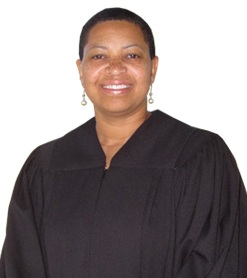
The two candidates who didn't need to tout their party credentials were David W. Ellis and Judge Freddrenna M. Lyle. Judge Lyle
was a committeeman herself, and recently; many in the room knew her well. Mr. Ellis was not a committeeman, but as the House Speaker's lawyer, he was also clearly an Insider. "Easiest decision we'll have all day," one committeeman told me when Ellis stepped up. Later, another candidate would remind the committeemen that he, too, had been one of their number. But he had been committeeman in what Richard J. Daley used to quaintly refer to as one of the "county towns." Just the fact that he had to remind his audience put him at a disadvantage; he was not slated.
The room was filled with Insiders, and nearly all the lawyers parading to the podium were trying to look a little less like Outsiders. In this context, to me at least, the very rhetorical device that so offended Mr. Brown struck me as a little threadbare. What works with juries or school groups didn't seem very effective at the Hotel Allegro: The committeemen knew which hopefuls they'd seen before, which ones have been coming to events for years and which ones popped out of the woodwork within the last few months. The protestations of loyalty bothered Mr. Brown and, I'm sure, many of his readers. After awhile, I hardly even noticed these declarations anymore. Worse for the candidates, I don't think the committeemen noticed, or cared, much about these either.







 Posts
Posts


